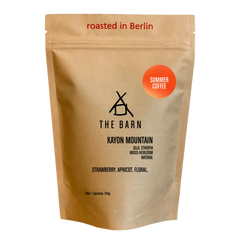


For many years, we said no to decaf. Not because there was no demand - quite the opposite. Customers asked us for decaf coffee for years in our cafés, online, and through wholesale partners around the world. But for us, coffee quality has always come first.
Traditional decaffeination methods often compromised flavour, clarity, and sweetness. Most coffees simply did not meet our standards in the cup. They lacked the vibrant complexity and origin character that define specialty coffee. That began to change in 2018.
Naturally Low-Caffeine Coffee
Our journey toward lower caffeine coffees started with rare naturally low-caffeine varieties such as Aramosa and Laurina. These coffees allowed us to explore a different coffee experience without compromising quality. When we launched our Low Caf Reserve from Daterra in Brazil, the response was extraordinary. Customers embraced the idea immediately. The cup profile was elegant, sweet, and layered proving that lower caffeine coffees could still deliver the flavour experience we were looking for. But naturally low-caffeine varieties remain extremely limited in production. At the same time, demand continues to grow. More and more people are looking for ways to enjoy coffee throughout the day while reducing caffeine intake - whether for sensitivity, sleep, wellbeing, or simply lifestyle choices.

A New Generation: Sugarcane Decaf
Coffee culture is changing. A new generation of consumers is becoming more intentional about caffeine. Looking for balance, flexibility, and more freedom in how they enjoy coffee throughout the day. At the same time, decaffeination technology has evolved dramatically. Modern Sugarcane EA processing now allows caffeine to be removed far more gently while preserving the flavour integrity of the coffee itself. Most importantly for us: the cup quality has finally reached a level we can fully stand behind. The result is cleaner, sweeter, and more expressive than what most people expect from decaf coffee.

How It Works
The Sugarcane EA process uses Ethyl Acetate a naturally derived compound from sugarcane to remove caffeine while preserving much of the coffee’s original structure and flavour:
1. The green coffee is gently steamed to open the pores of the bean.
2. The beans are then washed in a solution of water and naturally derived Ethyl Acetate (EA), which selectively removes caffeine.
3. Finally, the coffee is rinsed and carefully dried before export and roasting.
Compared to traditional methods, the process is remarkably gentle helping preserve sweetness, clarity, and origin character in the cup.
Roasting Decaf
The decaffeination process also changes the physical structure of the coffee itself. During decaffeination, the beans lose density and moisture, becoming darker in appearance even before roasting begins. As a result, decaf coffees conduct heat faster and move more quickly through caramelisation and Maillard reactions during roasting. Their more porous structure can also bring oils to the surface more easily than regular coffees.
This means decaf coffees may appear visually darker, even when roasted to the same light profile as our regular coffees. At THE BARN, we roast our decaf coffees with the same philosophy we apply to all coffees in our line-up: clarity, balance, and expression of origin.
More Moments With Coffee
For us, these coffees are not about replacing the single origin experience at the heart of what we do. They are about creating more moments to enjoy great coffee throughout the day.
For years, decaf was simply not good enough for us. Today, a new generation of processing finally allows decaf to belong in specialty coffee and we believe this is only the beginning.