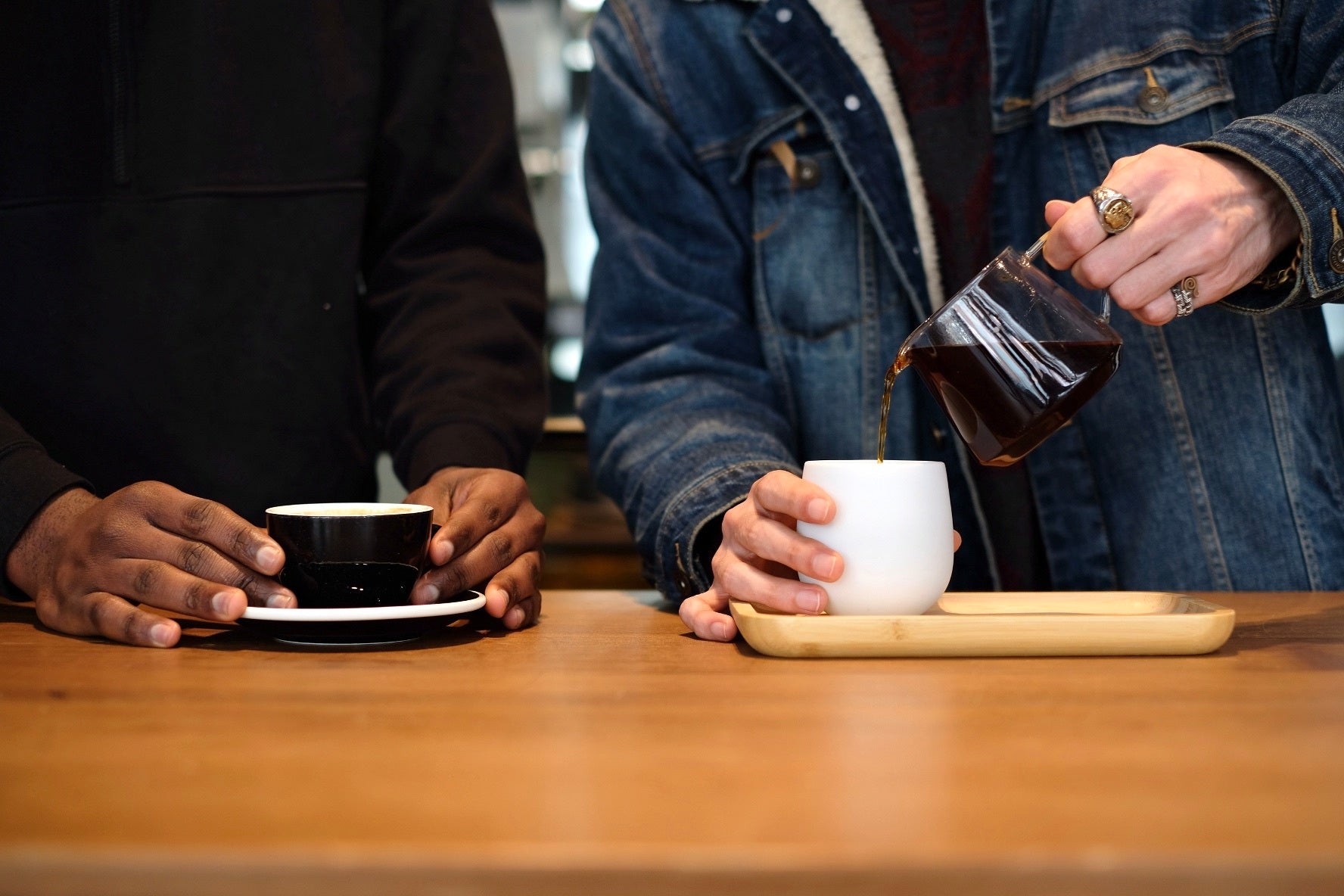


Two people can drink the same coffee and describe it in completely different ways.
One may notice bright citrus notes, while another finds sweetness reminiscent of honey or stone fruit. Neither is wrong. Coffee is one of the most complex natural beverages in the world, and how we experience it is shaped by far more than the coffee itself.
Origin, variety, processing, roasting, and brewing all influence the final cup. Yet the experience does not end once the coffee is served. Temperature, aroma, texture, and even the way coffee reaches the palate continue to shape what we perceive from the first sip to the last.
Learning to taste coffee is not about finding the “right” answer. It is about paying closer attention. Great coffee rewards curiosity.
Coffee Is More Than Taste
When we describe coffee, we often focus on flavour. In reality, flavour is the result of several senses working together.
Aroma plays the leading role. Much of what we identify as flavour is actually created by volatile aromatic compounds reaching the nose as we drink. This is why coffee can smell like jasmine, bergamot, berries, chocolate, or caramel, even though none of those ingredients are present.
Texture also changes our perception. A silky body creates a different impression from a tea like cup, while a creamy mouthfeel can enhance sweetness and soften acidity.
Temperature is equally important. A coffee served very hot may initially highlight body and roast character. As it cools, sweetness often becomes more pronounced, acidity appears brighter, and delicate aromatics begin to emerge. The coffee itself has not changed. Our perception has.
The environment also plays its part. The pace of the moment, the conversation around the table, or simply taking the time to slow down can all influence how we experience the same cup.

Every Coffee Evolves
One of the most fascinating qualities of specialty coffee is that it never stands still.
The first sip tells only part of the story.
Over the next several minutes, the coffee gradually reveals new characteristics. Floral aromas become more expressive. Fruit notes gain definition. Sweetness becomes increasingly apparent, while the relationship between acidity, body, and finish continues to evolve.
This is one of the reasons coffee professionals rarely judge a coffee immediately after brewing.
During professional cuppings, every coffee is tasted repeatedly as it cools. Rather than relying on a single impression, coffees are revisited several times, allowing a more complete picture to emerge. Some coffees are expressive from the beginning. Others become increasingly complex as their temperature falls.
Taking time with a cup often reveals far more than drinking it quickly ever could.
There Is No Perfect Way to Taste Coffee
Professional coffee tasting is built around consistency.
During cuppings, every coffee is prepared using the same ratio, water, grind size, bowls, and cupping spoons. Standardising every variable allows coffees to be evaluated as objectively as possible.
Yet evaluation and enjoyment are not the same thing.
Once a coffee has been selected, there is no single correct way to experience it. Brewing method, cup shape, serving vessel, temperature, and drinking pace can all influence which characteristics become most apparent.
A filter coffee served in porcelain may feel subtly different from the same coffee served in glass. Espresso develops continuously as it cools. Even small changes in the way coffee reaches the palate can influence how sweetness, acidity, and aroma are perceived.
Rather than searching for one perfect experience, specialty coffee invites us to appreciate many different expressions of the same coffee.
One Coffee, Different Perspectives
The 2 Way Cup was developed around exactly this idea.
Its design demonstrates how a simple change can influence sensory perception without changing the coffee itself.
The cup features two differently shaped drinking edges. One encourages a fuller perception of sweetness and body. The other places greater emphasis on clarity, lively acidity, and aromatic complexity. By simply rotating the cup, the same coffee can reveal different aspects of its character.
The goal is not to suggest that one side is better than the other.
Instead, the 2 Way Cup encourages comparison. It reminds us that coffee is not a fixed experience, but something that continues to evolve through attention, curiosity, and observation.


Every Detail Matters
At THE BARN, we believe exceptional coffee is the result of thousands of thoughtful decisions.
It begins with long term relationships with producers and continues through careful sourcing, precise roasting, and meticulous brewing. Every step is designed to express the unique identity of each coffee with clarity, balance, and sweetness.
Serving coffee is part of that philosophy.
Our Masterpiece coffees are presented in the 2 Way Cup because it encourages guests to slow down, compare, and appreciate the many dimensions within a single cup. It is a small detail, yet one that reflects a much bigger idea.
Great coffee is never static. Every cup evolves. Every sip reveals something new. Sometimes, all it takes is a little more attention to experience it.